
Millions of Americans are fighting a weight battle they simply cannot win — not because of willpower, not because of laziness, but because of a small butterfly-shaped gland in their neck that nobody told them was broken. The thyroid controls your metabolism. When it slows down, everything slows down with it — and the weight comes on no matter what you eat or how much you exercise.
The problem is that hypothyroidism, an underactive thyroid, rarely announces itself dramatically. It whispers. Here are 7 signs your thyroid may be quietly sabotaging your weight — and your health.
1. You’re Gaining Weight Without Eating More
This is the most classic and most frustrating sign of an underactive thyroid. You haven’t changed your diet. You haven’t changed your activity level. But the scale keeps climbing — slowly, steadily, without explanation. Thyroid hormones regulate the rate at which every cell in your body burns energy. When production drops, your basal metabolic rate falls with it, sometimes dramatically. Your body starts storing calories it used to burn, and no amount of calorie restriction seems to make a meaningful difference because the underlying metabolic rate problem remains unaddressed.

The weight gain from hypothyroidism often shows up first around the abdomen, face, and under the chin. It tends to feel different from normal weight gain — puffy, fluid-like, and resistant to diet changes.
What to do: If you’ve gained 10 or more pounds without a clear lifestyle reason, ask your doctor for a full thyroid panel including TSH, Free T3, and Free T4. Standard TSH tests alone often miss subclinical hypothyroidism.
2. You Feel Cold When Everyone Around You Is Fine
Thyroid hormones are the primary drivers of heat production in the body. When they drop, your cells burn less energy and generate less heat as a byproduct. The result is a persistent sensitivity to cold that goes beyond normal preference. You wear a sweater when others are in short sleeves. Your hands and feet are perpetually cold even in warm rooms. You pile on blankets at night while your partner kicks them off. This cold intolerance is one of the most reliable physical signs that thyroid function is impaired — and it often appears months or years before weight gain becomes obvious.

What to do: Track your basal body temperature first thing in the morning before getting out of bed. Consistently low readings below 97.8°F can indicate sluggish thyroid metabolism even when blood tests appear normal.
3. Your Hair Is Thinning or Falling Out in Unusual Amounts
Hair follicles are among the most metabolically active cells in the body — they require a constant supply of thyroid hormone to maintain their growth cycle. When thyroid function drops, hair follicles shift out of the growth phase and into the resting phase prematurely, causing diffuse thinning across the entire scalp rather than patchy bald spots. Many hypothyroid patients also notice their outer eyebrows thinning — particularly the outer third — which is considered one of the more specific physical signs of low thyroid function.
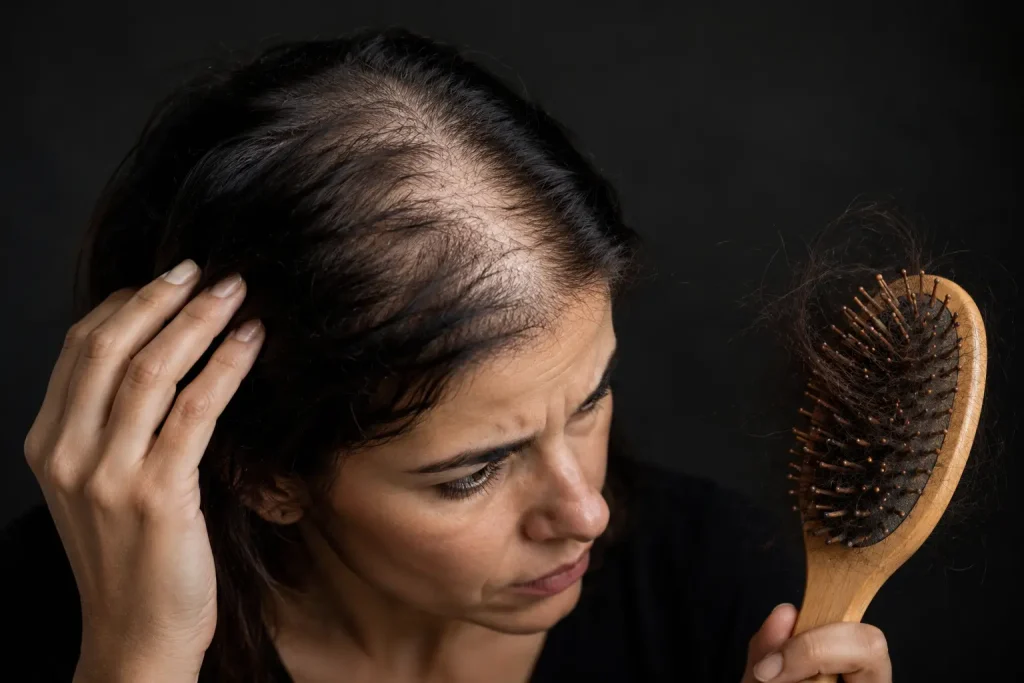
Unlike stress-related hair loss that tends to come in waves, thyroid-related hair thinning is steady and progressive, and it continues as long as the underlying hormonal imbalance remains uncorrected.
What to do: If you’re losing more than 100 hairs per day consistently, or notice your eyebrows thinning at the outer edges, include a thyroid panel in your next blood work. Hair loss from hypothyroidism reverses completely once thyroid levels are corrected.
4. You’re Exhausted Even After a Full Night’s Sleep
Thyroid-related fatigue is different from normal tiredness. It’s a deep, cellular exhaustion that doesn’t respond to sleep. You go to bed early, sleep eight or nine hours, and wake up feeling like you didn’t sleep at all. By midday you’re fighting to stay awake. By early evening you’re ready for bed again. This happens because thyroid hormones are required for mitochondrial function — the energy-producing machinery inside every cell. Without adequate thyroid hormone, your cells literally cannot produce energy efficiently, no matter how much rest you get.

Many people with undiagnosed hypothyroidism spend years being told their fatigue is depression, burnout, or just the result of a busy life. The distinction matters because the treatment is entirely different.
What to do: If fatigue is your dominant symptom and it hasn’t responded to sleep improvements or stress management, push for thyroid testing specifically. Many doctors only test TSH by default — insist on Free T3 and Free T4 as well.
5. Your Skin Is Dry, Rough, and Won’t Respond to Moisturizer
Thyroid hormones regulate the rate of skin cell turnover and the production of natural oils that keep skin hydrated. When thyroid function slows, skin cells are produced and shed more slowly, and oil production drops. The result is skin that feels dry and rough regardless of how much moisturizer you apply — because the problem is internal, not topical. The skin may also feel slightly thickened, particularly on the lower legs, and take on a yellowish tinge in some cases due to impaired conversion of beta-carotene.

Nails become brittle and slow-growing for the same reason. If your skin and nails have changed noticeably over the past year alongside other symptoms on this list, the connection may not be coincidental.
What to do: Stop blaming your skincare routine and investigate the hormonal root. Thyroid-related skin changes resolve almost completely once thyroid levels are properly managed.
6. Your Bowel Movements Have Become Sluggish and Infrequent
The digestive system depends on thyroid hormone to maintain the muscular contractions that move food through the intestines. When thyroid function declines, gut motility slows with it — sometimes dramatically. Constipation that wasn’t present before, bloating that doesn’t resolve, and a general sense of digestive sluggishness are all consistent with hypothyroidism. Some patients report going from daily bowel movements to every three or four days without any dietary change.

This slowed digestion also contributes to weight gain — not just because of retained waste but because slower gut motility affects how efficiently calories are absorbed and how quickly you feel full after eating.
What to do: If you’ve developed new, persistent constipation alongside other symptoms here, don’t treat it in isolation with laxatives. Address the thyroid first and watch how quickly digestion normalizes.
7. Your Mood Has Shifted Toward Depression and Mental Fog
Thyroid hormones cross the blood-brain barrier and directly regulate serotonin production, dopamine sensitivity, and the overall metabolic activity of the brain. When thyroid levels drop, brain chemistry shifts with them. The result can look identical to clinical depression — low mood, loss of motivation, difficulty finding pleasure in things you used to enjoy, emotional flatness, and a pervasive sense of being stuck. Alongside this, many hypothyroid patients experience cognitive slowing — words come slower, memory feels unreliable, concentration requires unusual effort.

Thousands of Americans are being treated for depression with antidepressants when the underlying cause is an undiagnosed thyroid problem. The medications don’t work — not because the depression isn’t real, but because the hormonal root cause is never addressed.
What to do: If you’ve been diagnosed with depression or anxiety and your treatment isn’t working as expected, request a complete thyroid panel. It’s a simple blood test that could change everything.
Hypothyroidism is one of the most underdiagnosed conditions in America — particularly in women, who are five to eight times more likely to develop it than men. If four or more of these signs sound familiar, don’t accept “your labs look normal” as a final answer. Advocate for a complete thyroid panel, find a doctor who will look at the full picture, and understand that the weight you’ve been fighting may not be a failure of discipline. It may be a failure of diagnosis.